5 Golden Tips for Your First Amigurumi Project: A Beginner's Guide
New to amigurumi? We've prepared 5 golden tips to ensure your first project is enjoyable and successful. From choosing the right materials to mastering tight stitches and having patience, find all the essential details…
5 Golden Tips for Your First Amigurumi Project: A Beginner's Guide
Welcome to the wonderful world of amigurumi! The idea of creating these adorable, crocheted toys might fill you with excitement. However, for those picking up a hook and yarn for the first time, starting can seem a bit daunting. Don't worry! Every master was once a beginner. I've prepared 5 golden tips to help make your first amigurumi project enjoyable and successful. These tips will guide you through the basics, ensuring you take solid steps forward.
1. Choose the Right Yarn and Hook
Selecting the correct materials for amigurumi is key to your project's success. For beginners, 100% cotton yarns are ideal. Cotton yarn allows you to see your stitches clearly, which helps immensely with counting and inserting your hook into the right spot. It also has a sturdy structure that helps your finished toy maintain its shape better.
Hook selection is determined by the yarn you're using. Generally, the yarn label will suggest a hook size. However, for amigurumi, it's often best to choose a hook that is one or half a size smaller than recommended. This creates a tighter fabric with fewer gaps, preventing the stuffing from showing through and giving your toy a more polished look. Hooks between 2.0 mm and 3.0 mm are generally good starting points.
Tip: To check if your yarn and hook are compatible, crochet a small swatch. If you see gaps between your stitches, try a smaller hook.
2. Opt for a Simple Pattern
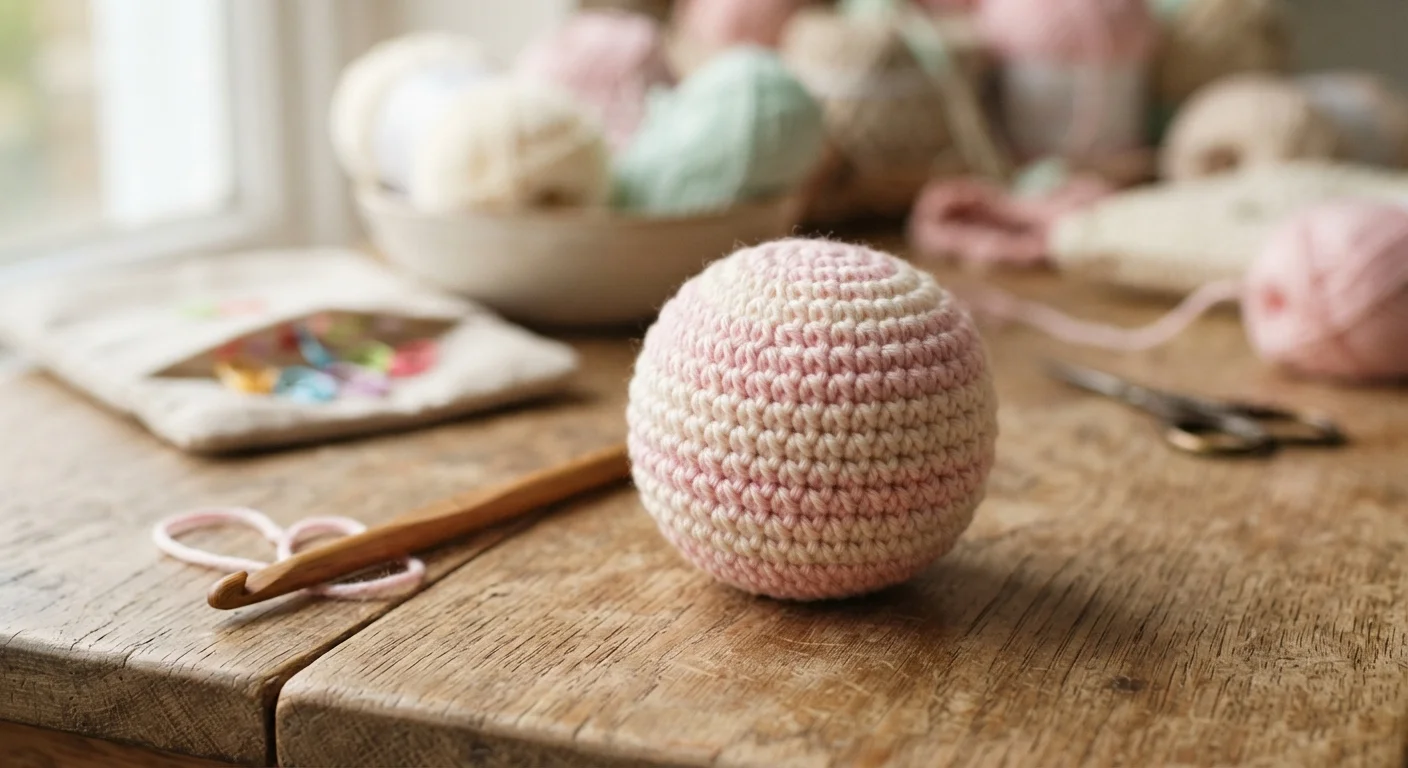
Choosing a complex, multi-part, or highly detailed pattern for your first project can quickly become overwhelming. It's best to start with a pattern that is worked in a single piece, uses few colors, and has a simple shape. For instance, a small ball, an egg, or a simple fruit (like a strawberry) can make excellent beginner projects. These types of patterns allow you to learn basic techniques and get comfortable with your hook while providing a quick sense of accomplishment.
Simple patterns usually involve only fundamental techniques like single crochet (SC), increases (inc), and decreases (dec). This helps beginners grasp the core building blocks without getting confused. Remember, the goal is to understand the process and develop fundamental skills.
3. Master Tight Stitching
One of the defining characteristics of amigurumi is its tight fabric, which prevents the stuffing from showing through. To achieve this tightness, you'll need to master a few basic techniques:
- Magic Ring (Magic Circle): This is the starting point for most amigurumi projects. It allows you to create a tight beginning without a hole in the center. You can find many video tutorials online for this.
- Single Crochet (SC): This is the primary stitch in amigurumi. The vast majority of your project will be made up of single crochets.
- Slip Stitch (SS): Used to join rounds or finish off pieces.
When crocheting, try not to hold your hook too loosely. Your hand might get tired at first, but with practice, you'll find the right tension. Remember, amigurumi looks best when crocheted tightly.
4. Prepare Your Materials
Before you start crocheting, make sure all your materials are within reach. This allows you to progress without interruption and without losing motivation. Besides your yarn and hook, here are other essential materials you'll need:
- Fiberfill: To stuff your toys. Opt for washable and hypoallergenic options.
- Safety Eyes or Embroidery Floss: To add expression to your toys. If you're making toys for young children, consider embroidering eyes with floss instead of using safety eyes for extra security.
- Tapestry Needle: For joining pieces and weaving in yarn tails.
- Scissors: For cutting yarn.
- Stitch Marker: Absolutely essential for keeping track of the beginning of your rounds, especially when working in a spiral.
Having all these materials ready will ensure your project runs smoothly.
5. Be Patient and Enjoy the Process
Learning amigurumi is a process, and like any new skill, it's perfectly normal to make mistakes at the beginning. Maybe your first magic ring won't be perfect, or you'll lose count of your stitches. The important thing is not to give up and to approach the learning process with patience.
Remember, amigurumi is not just about making a toy; it's also about reducing stress and enjoying a creative process. Don't be afraid to unravel your work and start again when you make a mistake. Each time you unravel and re-crochet, you learn something new and get more comfortable with your hands. Enjoy the journey of this handmade craft more than just the final outcome. Your first amigurumi doesn't have to be perfect; it just has to be made by you!
Conclusion
Your first amigurumi project is the initial step into this delightful hobby. Choosing the right materials, starting with a simple pattern, mastering basic techniques, organizing your supplies, and most importantly, being patient, will make this journey much more enjoyable. With every stitch, you'll improve a little more, and with every finished project, your confidence will grow.
To support and inspire you on your amigurumi journey, don't forget to follow our Instagram account @aylawangurumi! There you'll find many tips, patterns, and wonderful amigurumi examples. Happy crocheting!